
Plenary Speakers
 |
Feynmann’s and Faraday’s Legacy to NanomanufacturingProf. J. A. McGeough
Abstract
Nobel Prize Winner, Richard Feynman’s work contains elements of atomic-scale manufacturing needed by industrial requirements of the 21st Century. In the 19th Century, Faraday’s metallurgical researches had laid the foundations for the use of alloy steels, as cutting tools needed in a burgeoning manufacturing industry. Faraday’s laws of electrolysis saw electroplating and electrolytic dissolution being the mainstay of 20th Century manufacturing. Electrochemical machining (ECM) has moved from its use in drilling micro-holes in aircraft engine turbine blades to nano-scale ECM. Replacement of liquid dielectric by aqueous electrolytes has given rise to high-speed drilling of micro-holes more than 10 times faster than EDM in a novel process termed electrochemical arc, or discharge machining (ECAM, or ECDM). The latter process has been found to have fresh applications in the nano-machining of non-insulating and semi-conducting materials such as glass and silicon. Electroforming is an extension of electroplating. Its application of reproducing intricate and micro-shapes has seen its emergence to microelectronics. Both Feynmann and Faraday foresaw the use of electron beam and ion beam nano-scale machining. At The Royal Institution R.V. Jones on his discourse on “More and More About Less and Less” drew attention to how micro-measurement is vital to nanoscale manufacturing.
Biography
Professor Joe McGeough is at The University of Edinburgh, School of Engineering, Institute of Micro and Nano Systems. He was the 7th holder of the Regius Chair of Engineering, main field of research is unconventional notably electrochemical machining. Past President of the Institution of Mechanical Engineers, and Editor-in-Chief Emeritus of Proceedings of the Institution of Mechanical Engineers, Journal of Nanomaterials, Engineering and Systems. He is a Fellow Emeritus of CIRP, Fellow of the International Society for Nanomanufacturing, The Royal Society of Edinburgh and The Royal Academy of Engineering. Also an Honorary Professor of Nanjing University of Aeronautics and Astronautics. |
 |
Ultra Precision Story in KIMMDr. Chun-Hong Park
Abstract
Ultra-precision machine technology, as its name suggests, is one of the most challenging technologies of our time, a challenge any researcher would want to tackle. Since 1985, the Korea Institute of Machinery and Materials (KIMM) has been conducting continuous government-funded projects to develop this technology. This presentation will explore KIMM’s ultra-precision technology development process, which began with precision bearing design technology, progressed to the development of motion units design technology, and then to the development of ultra-precision machines, focusing on previously published papers. Additionally, the industrial and technological significance of the projects carried out to apply the developed technology will be introduced.
Biography
Dr. Chun-Hong Park received his master’s degree from Hanyang University and joined the Precision Machine lab. at the Korea Institute of Machinery and Materials (KIMM) in 1985. He received his doctorate from Kobe University in Japan in 2000. He served as the president of KIMM from 2017 to 2020 and the president of the Korean Society of Precision Engineering in 2017. He is currently a principal researcher of KIMM and a regular member of the National Academy of Engineering of Korea. His primary areas of interest include precision fluid bearing design and ultra-precision motion mechanism design. He applied these technologies to the development of precision/ultra-precision machines, and commercialized machine tools such as ultra-precision roll die machine, centerless grinder, floor type boring machine, and probing machine for semiconductor wafer inspection. |
 |
Metal-Polymer Multi Materials Using Nano/Micro TexturesProf. Yusuke Kajihara
Abstract
Since metal parts have been recently replaced by polymer to reduce weight mainly in the automotive components, they contain a lot of metal-polymer connection points. To join metal and polymer directly, we focus on the injection molded direct joining (IMDJ), in which a micro/nano-structure is formed on a metal surface and molten polymer infiltrates into the micro/nano-structure mainly via injection molding, leading to a strong joint mainly through mechanical interlocking. One of the key factors for IMDJ is the metal surface treatment method. We have recently proposed to utilize abrasive blasting and hot water treatment (HWT) to form small structure on metal surface, which is simple, inexpensive, and chemical-free. Here HWT is a very simple treatment method, where nanoscale metal oxides or hydroxides are formed on metal surface just by dipping a metal plate into pure hot water for a while. This presentation introduces the recent global trends in metal-polymer direct joining and also our latest progress using abrasive blasting and HWT, including the detailed procedure of our joining experiments, joining strength prediction via metal surface morphology, and elucidation of the joining mechanism via mechanical interlocking and chemical interaction. In addition, the application of HWT to the semiconductor encapsulation technology is introduced with experimental evidence.
Biography
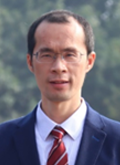
Yusuke Kajihara is a Professor at the Institute of Industrial Science (IIS), the University of Tokyo (UTokyo). He graduated from the Department of Precision Engineering at UTokyo in 2001, completed a master’s degree in 2003, and received a doctoral degree in engineering from UTokyo in 2007. He joined the Department of Basic Science at UTokyo as a postdoctoral researcher in 2007 and worked on nanoscale thermal microscopy. Then he joined IIS as a faculty member (lecturer) and started to organize his own research group in 2012. He started new researches on metal-polymer direct joining using nano/micro textures, and on estimation of polymer residual stress via terahertz polarization, in addition to nanoscale thermal microscopy. He also worked on adhesive joining as a visiting researcher for a year at Imperial College London in 2016. He was promoted to a professor at IIS, UTokyo in April, 2023. |
 |
Advancing from Classical to Quantum Precision Displacement Measurement: State-of-the-Art and Atomic Time Grating SensorsProf. Xiaokang Liu
Abstract
Precision displacement measurement technologies are essential to the performance of ultra-precision high-end equipment, including advanced CNC machine tools, semiconductor manufacturing and inspection systems, scanning-type surface profilometers, and specialized VLSI equipment. Despite continuous evolution in measurement accuracy, several challenges persist. These include the inherent trade-off between measurement range and accuracy, the difficulty in tracing error sources, the complexity of multi-degree-of-freedom measurement, and the emerging demands of quantum metrology. In response, we have developed novel time grating theories and technologies. In this report, we first review the principles and evolution of time grating displacement sensors, and then present major breakthroughs: a long-range absolute time grating sensor achieving nanometric accuracy; a planar two-dimensional time grating sensor enabling synchronous displacement measurement over a large area 400 mm × 400 mm with nanometric resolution; a new angle standard using time grating sensors that reaches an accuracy of ±0.005″, sets a new global benchmark, surpassing the accuracy of measurement systems worldwide while enabling further iterative improvements; and an atomic time grating sensor that pioneers quantum-enabled absolute full-cycle angular displacement measurement, establishing a landmark in quantum metrology and laying a solid foundation for defining angle as the eighth base unit within the International System of Units.
Biography
Prof. Xiaokang Liu, President of Chongqing University of Technology, received his B.E., M.E., and the Ph.D. degrees from Chongqing University in 1999, 2002, and 2005, respectively. He worked as a postdoctor at Hefei University of Technology in 2006. His research focuses on micro-nano sensing theory and technology, and intelligent instrumentation. He has published over 70 peer-reviewed journal papers. He received National Award for Technological Invention 2nd Prize in 2010, Gold Award for Outstanding Chinese Patented Invention in 2008, and Chongqing Award for Technological Invention 1st Prize thrice in 2006, 2021 and 2025, respectively. He was awarded the ISNM Distinguished Scientist Award (Taniguchi Medal) in 2024. He is an ISNM Fellow and the Chair of the ISNM Young Scientists Committee. |